Starting the gym when it intimidates you
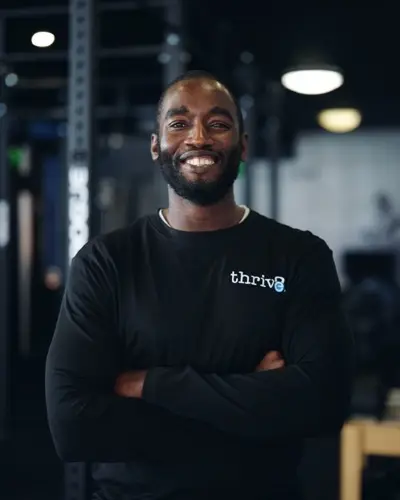
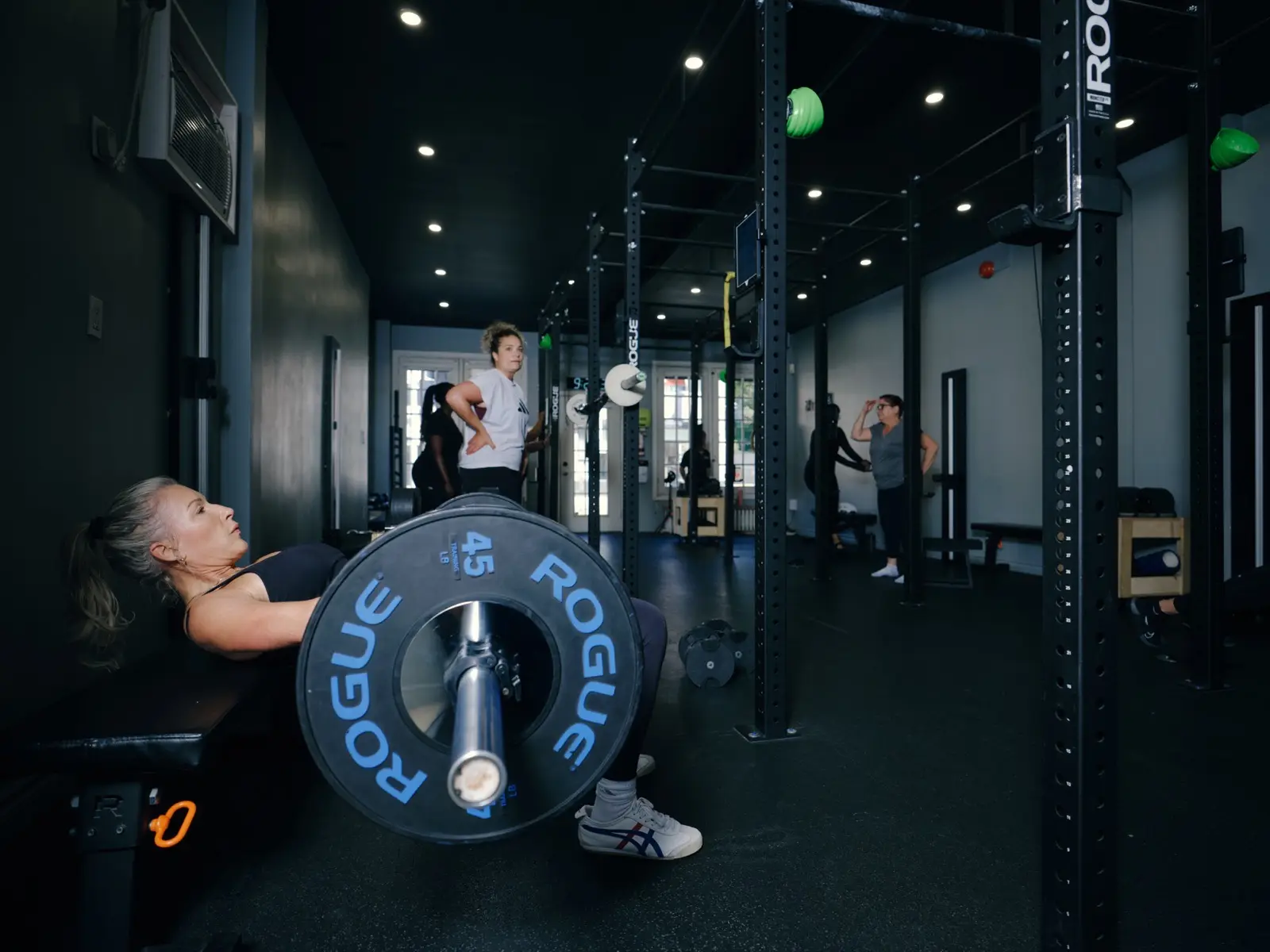
If the thought of walking into a gym makes you want to do almost anything else, you are not unusual and you are not weak-minded. Around half of adults report it, more than a third say it has actually stopped them exercising, and it affects women considerably more than men.
What follows is what the numbers say, what the feeling actually is underneath, and what helps. Some of it is research and some of it is what we watch happen on the floor in The Beaches. The two are labelled so you can tell them apart.
How common this actually is
About half of Americans say they have experienced what surveys have taken to calling gymtimidation, and roughly a third feel it specifically near someone visibly in better shape. A separate survey found more than a third of adults avoid working out because of it.
Those are consumer surveys commissioned by fitness companies, not peer-reviewed studies, so treat the exact percentages loosely. What they establish is the order of magnitude, and it is not a fringe experience.
The academic work is narrower and more careful. Research on social physique anxiety - the fear of being judged on how your body looks - has repeatedly found it predicts avoiding exercise, and that it lands hardest on the people who would benefit most.
The people most put off by a gym are, with grim reliability, the people a gym would help most.
What you are actually afraid of
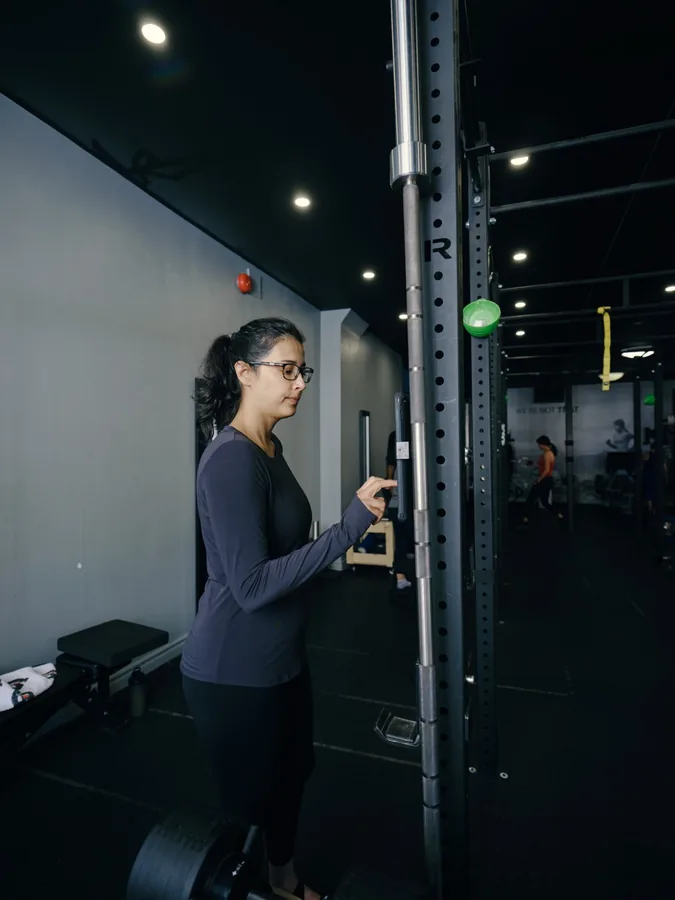
Almost nobody is afraid of the equipment. When we ask at a Baseline, the answer is nearly always one of three things.
Being watched. Not by everyone - by one specific imagined person who knows what they are doing and can tell that you do not.
Not knowing what to do. Walking in without a plan means every decision is made in public: which machine, how much weight, how many, what next. That is a lot of small exposures in an hour.
Being the worst one there. Which is a comparison problem, and it only exists in rooms where comparison is possible.
Notice that none of the three is about fitness. They are about exposure, uncertainty and comparison, which is why getting fitter first does not fix it, and why people who try that usually never start.
The things that make it worse
Mirrors. A wall of them turns a private activity into a performance and puts your own reflection in your eyeline for an hour.
Loud music and a busy floor, which raise arousal in a situation where you are already keyed up.
Open floor plans with no assigned space, where finding somewhere to stand is itself a decision made in public.
Peak hours. Six in the evening in January is the single worst conditions this feeling can be presented with, and it is exactly when most people choose to start.
And the well-meant advice that nobody is looking at you. It is true and it does not help, because the fear was never really that people are looking. It is that you do not know what you are doing and everybody can tell.
What actually helps, roughly in order
Arrive with a plan you did not write. If somebody else decided what you are doing today, the number of public decisions drops to zero. This is the single biggest change most people can make and it costs nothing to arrange.
Go at a quiet hour. Early morning is a different building from six in the evening. If you can only train at peak times, pick somewhere small enough that peak does not mean queueing.
Start with fewer variables. Five movements you repeat is less exposing than a different circuit every visit, and it also happens to be better training.
Be somewhere people are visibly a normal range of fitness. Comparison needs a comparator. Rooms full of regular adults produce far less of it than rooms full of people who train for a living.
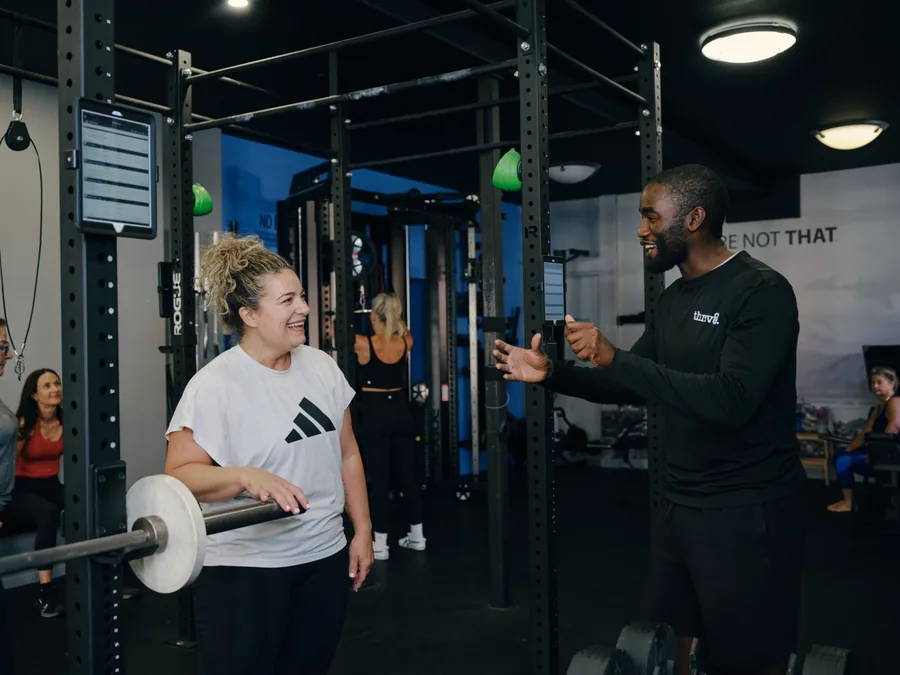
Tell someone. Every good coach has heard this a hundred times. Saying it out loud at the start converts it from a secret into a thing being handled.
| Makes it worse | What helps |
|---|---|
| A wall of mirrors | a room without them |
| Loud music and a busy floor | a quiet hour, often early morning |
| No plan, so every decision is made in public | a plan somebody else wrote |
| A different circuit every visit | a handful of movements you repeat |
| A room of people who train for a living | a room of regular adults |
| Peak hours in January | somewhere small enough that peak does not mean queueing |
What we see on the floor
This is our experience rather than research, and it is consistent enough to be worth saying.
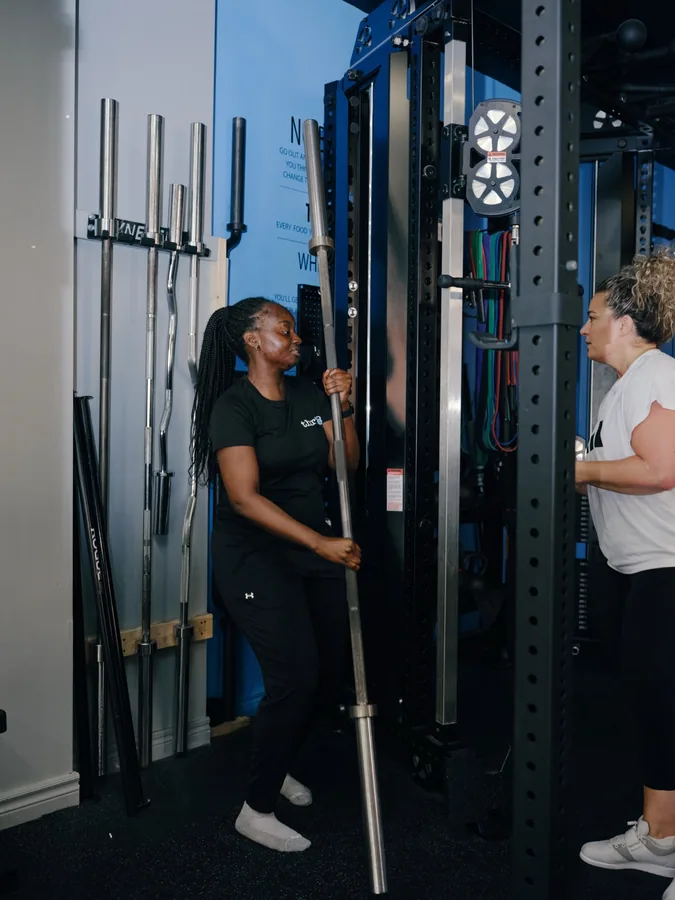
The first session is nearly always the worst one, and the gap between how bad people expect it to be and how bad it is turns out to be large. One member wrote afterwards that she had been intimidated by gyms her whole life and had not missed a single week since.
Another described falling over during her first workout, and what happened next: the three other people training said they had all fallen at the beginning too. That is the actual mechanism by which the fear goes, and it is nothing to do with getting fitter.
A third put it more plainly than we could: she recommends it to anyone nervous about taking those first steps.
The thing they have in common is that none of them got braver. The room was just different.
When a different room is the answer
If you have tried three times to make a large commercial gym work and it has not held, the sensible conclusion is not that you lack discipline. It is that the environment was wrong for you, and there are environments built for exactly this.
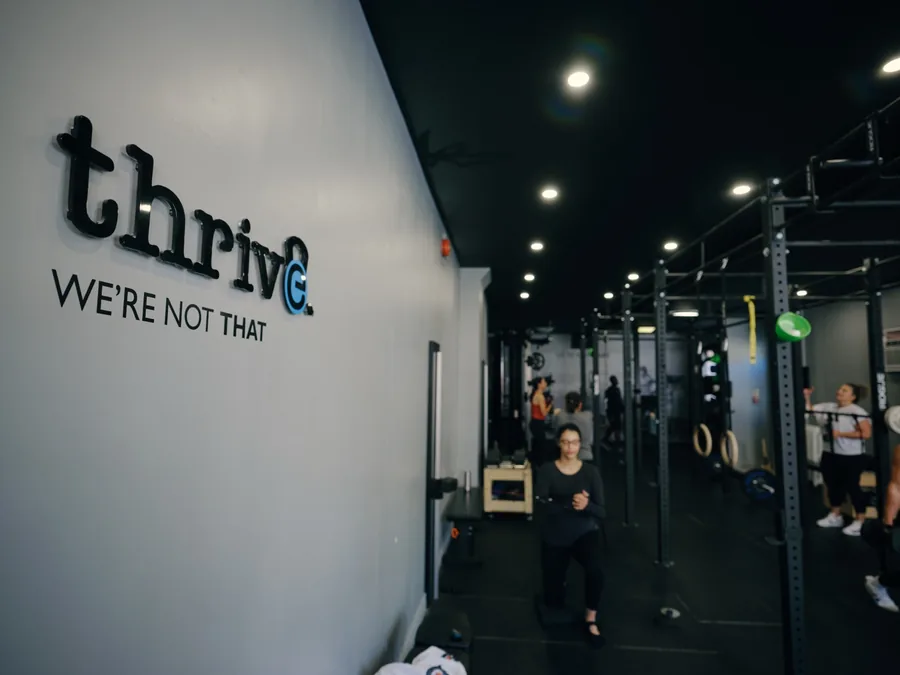
Ours has no mirrors, no music and a maximum of six people per coach, each on their own program. That is not a lifestyle preference, it is the removal of the three things that make the feeling worse. Whether you come to us or not, those are the features worth looking for.