How to choose a personal trainer
Ask for the certification by name and look it up. Ask what happens between sessions. Ask what they would do if you turned up with a sore back. And ask what happens if it does not work.
Four questions, and most of what you need to know comes out of them.
Personal training is unregulated in Ontario. Anybody can use the title, which puts the whole job of vetting on you. Below is how to do it in about twenty minutes, written by someone who has a stake in the answer and will flag where that applies.
Start with the certification, and check it
"Certified personal trainer" on its own means nothing, because there is no register it refers to. The certification body is the information, and there are only a handful worth knowing in Canada.
CSEP-CPT comes from the Canadian Society for Exercise Physiology and requires a relevant degree or equivalent. CanFitPro and ISSA are widely held and reputable. NSCA-CPT and ACSM are the common American equivalents.
For nutrition, Precision Nutrition Level 1 is the usual credible one. For movement screening, Functional Movement Systems.
Ask which one, then spend two minutes looking it up. A trainer who will not name the body, or names one you cannot find, has answered the question.
| Certification | What it tells you |
|---|---|
| CSEP-CPT | from the Canadian Society for Exercise Physiology, and requires a relevant degree or equivalent |
| CanFitPro | widely held and reputable |
| ISSA | widely held and reputable |
| NSCA-CPT and ACSM | the common American equivalents |
| Precision Nutrition Level 1 | the usual credible nutrition certification |
| Functional Movement Systems | movement screening |
If somebody tells you they are certified and does not say by whom, that is the whole answer.
Four questions to ask before you pay
What happens between sessions? If the honest answer is nothing, you are buying supervision rather than coaching. That may be all you want, but it should be priced accordingly.
What would you do if I turned up with a sore back? You are listening for whether they modify the session or push through it, and whether they know where their scope ends. A good answer includes the phrase "that is outside what I can assess."
How do you decide what I do on day one? The answer should involve looking at you move before prescribing anything. If a program exists before the assessment, it is somebody else's program.
What happens if it does not work? Most will not have an answer, which is normal and not damning. But it is worth hearing how they respond to the question.
What a good first appointment looks like
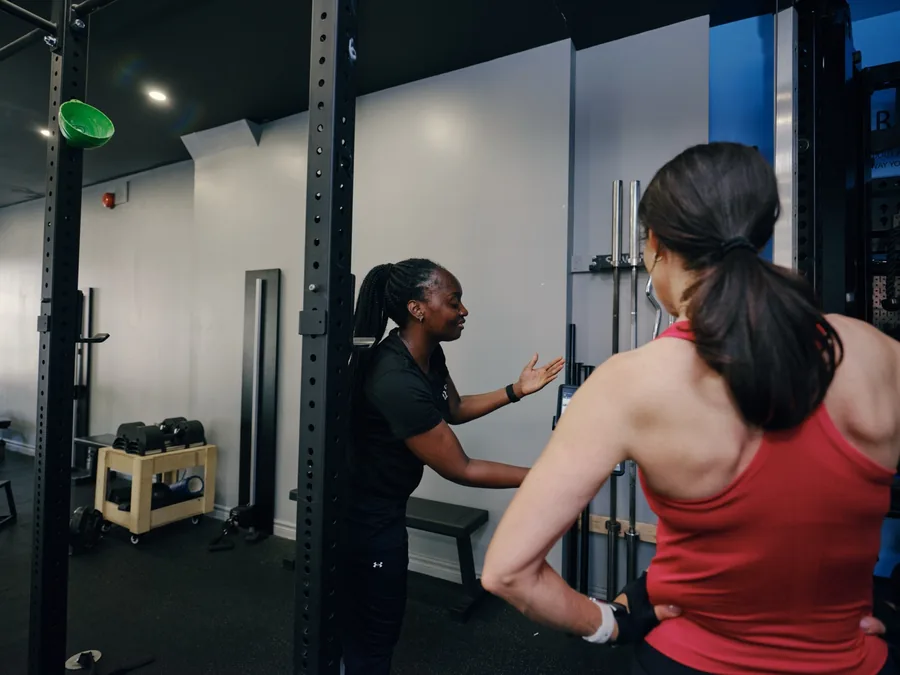
You should do more talking than they do. Someone taking a proper history asks about previous injuries, what you have already tried, what your week actually looks like and what you are hoping for. Then they watch you move.
You should leave knowing what the plan is, in plain language, and what the first few weeks will involve. If you leave with a package and no plan, the order of events was wrong.
And you should be told honestly if you are not a good fit. A trainer willing to lose the sale on the first appointment is telling you something reliable about the rest of the relationship.
The red flags
A diagnosis. Personal trainers are not qualified to diagnose anything. Someone confidently telling you what is wrong with your shoulder is out of their depth, not deep in their expertise.
A hard close on the day. Pressure at the first appointment is the clearest signal that the appointment was a sales meeting.
Before-and-after photos as the main evidence. They are selected by definition and tell you nothing about the median result.
Prices you cannot find. A business that will not publish a number before a phone call has decided the number is a problem.
Anything guaranteeing a specific weight in a specific time. Nobody can promise that, and the ones who do are describing a diet rather than a training relationship.
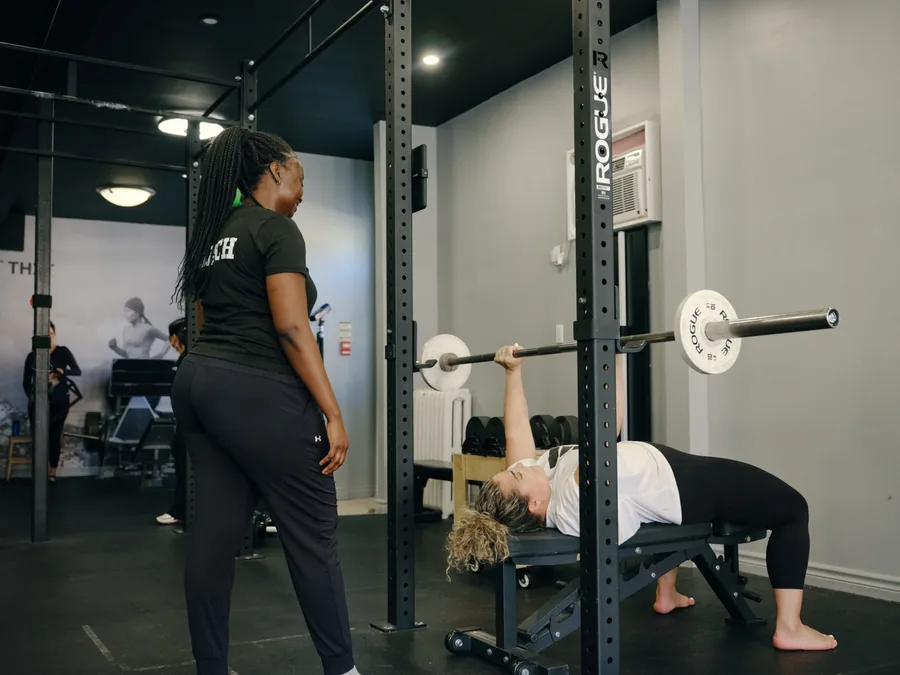
Where I have a stake, said plainly
I own a studio, so treat the next paragraph as an example rather than as neutral advice.
Our coaching team holds Precision Nutrition Level 1, Functional Movement Systems Level 2, CanFitPro, CSEP-CPT and ISSA, and we name them because an unnamed credential is a claim that fails the moment anyone checks. Our guarantee is written down: complete Fit Reset as agreed and if you do not drop two clothing sizes in eight weeks, we continue coaching at no additional charge until you do.
You do not have to choose us. But those two things - named credentials and a written guarantee - are a reasonable bar to hold anybody to, and most of the market does not meet it.
There is more on what all of this typically costs in what a personal trainer costs in Toronto.
Format matters more than people expect
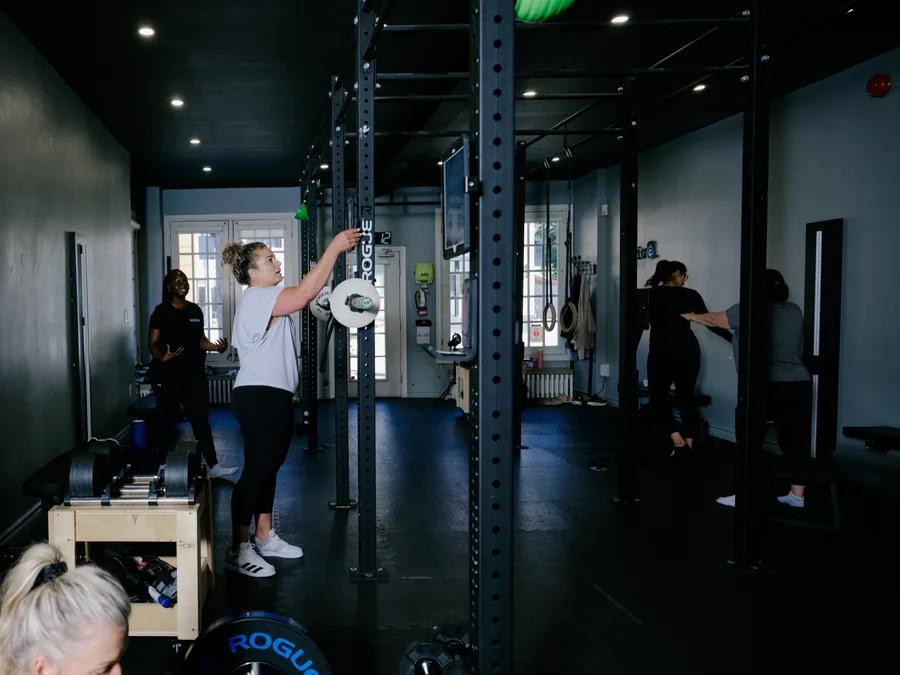
One-to-one, semi-private and small group are three different products and the right answer depends on what you actually need. One-to-one is right when something requires undivided attention. Semi-private, where a coach takes several people on separate programs, gets you individual coaching at a considerably lower rate. A class is neither, whatever it is called.
The mistake worth avoiding is choosing the format on price and then being disappointed that it was not the other one. Decide what you need first.