What a personal trainer costs in Toronto
Most Toronto personal training runs $60 to $180 a session. A commercial gym trainer sits around $60 to $90, an independent trainer $80 to $130, and premium private coaching $120 to $180 and up. Semi-private, where a coach takes several people at once on separate programs, runs roughly $40 to $80.
Below is where those numbers come from, what moves them, and the costs that do not appear in the quoted price. We publish our own prices at the end, because a page about what things cost is a strange place to be coy.
What you actually pay, by type of trainer
The single number people want does not exist, but the bands are consistent across the Toronto operators who publish theirs. A trainer employed by a commercial gym runs about $60 to $90 a session. An independent trainer, renting space or working out of a studio, is typically $80 to $130, and a 2026 roundup of Toronto training services puts in-home and studio sessions at $75 to $125. Premium private coaching starts around $120 and climbs past $180.
Those are market surveys published by fitness businesses rather than independent research, so treat them as a range rather than a rate card. What they agree on is the shape: the gap between the cheapest and the dearest hour in this city is roughly three times, and it is not three times the coaching.
| Type of trainer | Per session | Twice a week, a month | Three times a week, a month |
|---|---|---|---|
| Commercial gym trainer | $60 to $90 | $520 to $780 | $780 to $1,170 |
| Independent trainer | $80 to $130 | $690 to $1,130 | $1,040 to $1,690 |
| Premium private coaching | $120 to $180 | $1,040 to $1,560 | $1,560 to $2,340 |
| Semi-private | $40 to $80 | $350 to $690 | $520 to $1,040 |
A $60 session and a $180 session are rarely the same hour sold at different prices. They are usually different products with the same name.
The other number worth having is the monthly one, because sessions are not bought singly. Twice a week at $90 is about $780 a month before tax. Three times a week at the same rate is $1,170. That is the arithmetic most people do second, and it is the one that decides whether they carry on past March.
Why the range is so wide
Four things move the number, and only one of them is the trainer's ability.
The first is who employs them. A commercial gym takes a substantial share of the session fee, so a $90 hour might leave the trainer $30. That is why turnover in those roles is high and why the person who assessed you in January is often gone by June.
The second is the room. Rent on Queen Street East is not rent in an industrial unit, and it is not the nothing-at-all of a trainer who comes to your front room. The third is what the hour includes: whether a program gets written between sessions, whether anybody looks at your progress, whether you can ask a question on a Tuesday.
The fourth is simply what the market will bear in that postcode, which is a less satisfying answer than the other three and probably explains more of the variation than any of them.
The costs nobody quotes you
The session price is rarely the amount that leaves your account.
HST. Ontario adds 13%. A $100 session is $113. Over a year at twice a week that is roughly $1,350 in tax alone, and it is routinely left off the advertised figure.
A separate gym membership. Plenty of Toronto trainers work inside a gym you must join first, which adds anywhere from about $15 to over $250 a month on top of the training.
Assessment and setup fees. Common, usually one-off, and usually disclosed late.
Cancellation terms. The real cost of a package is what happens to unused sessions. Twenty-four-hour policies are normal and reasonable; expiry dates on prepaid blocks are where money quietly disappears.
| Cost | What it adds | What to ask |
|---|---|---|
| HST | 13% on top: a $100 session is $113 | Is tax in the quoted price? |
| Separate gym membership | About $15 to over $250 a month | Is the space included? |
| Assessment or setup fee | One-off, often disclosed late | Are there any fees before the first session? |
| Unused sessions | Lost if a prepaid block expires | What happens to a session I miss? |
Ask two questions before you buy anything: what is the total monthly figure including tax, and what happens to a session I cannot attend.
Where semi-private sits, and why it costs less
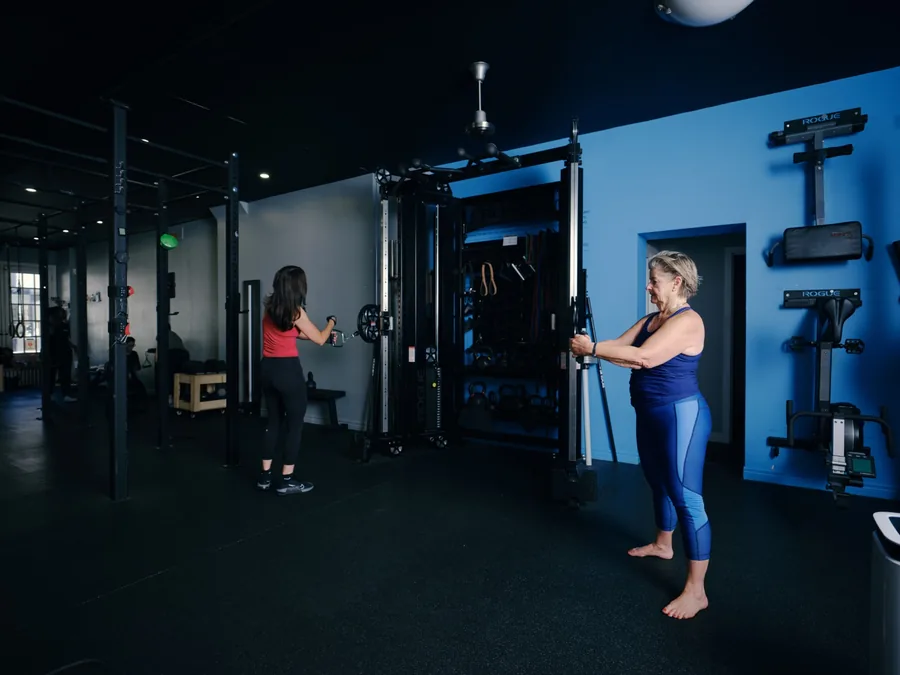
Semi-private training is one coach with several people at once, each on their own program. It is not a class, because nobody is following along, and it is not one-to-one, because the coach is not counting your reps.
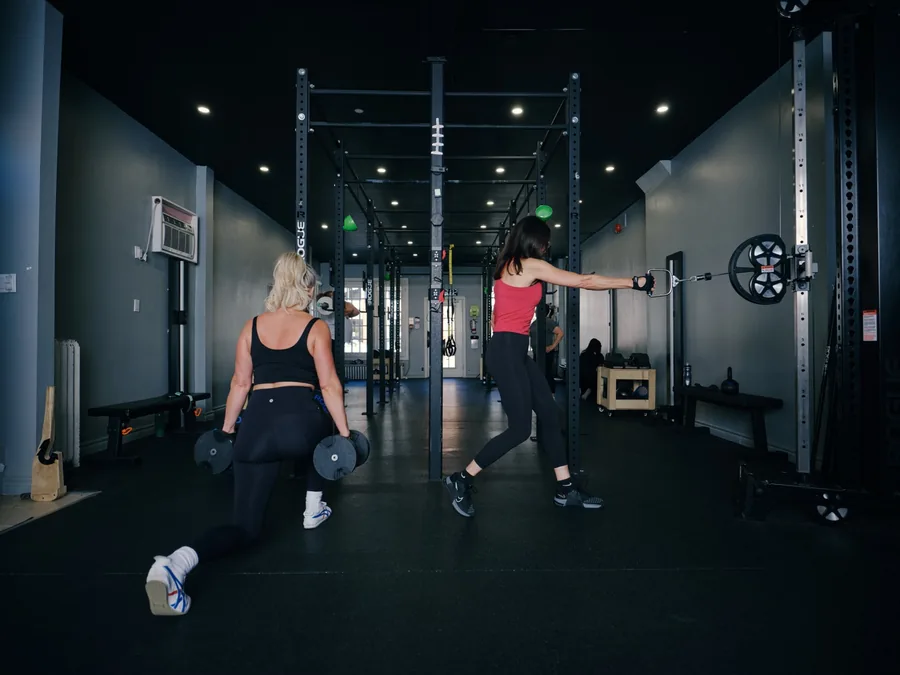
Toronto rates for it run roughly $40 to $80 a session, which is where most of the price difference in this article actually comes from. You are not buying less coaching. You are buying a coach who is watching technique rather than standing over one person with a stopwatch.
It is also the format most likely to be quoted as a membership rather than a session price, which makes comparison harder. There is a fuller breakdown in what semi-private training costs. And if you are trying to work out whether what you are being sold is semi-private or a small group class, we pulled the two apart in semi-private vs small group training.
The honest limitation: if you need somebody's undivided attention for a specific reason, a return from surgery, a competition, a movement problem that needs constant correction, then one-to-one is worth its premium and semi-private is not the answer.
What we charge, and why it is on the website
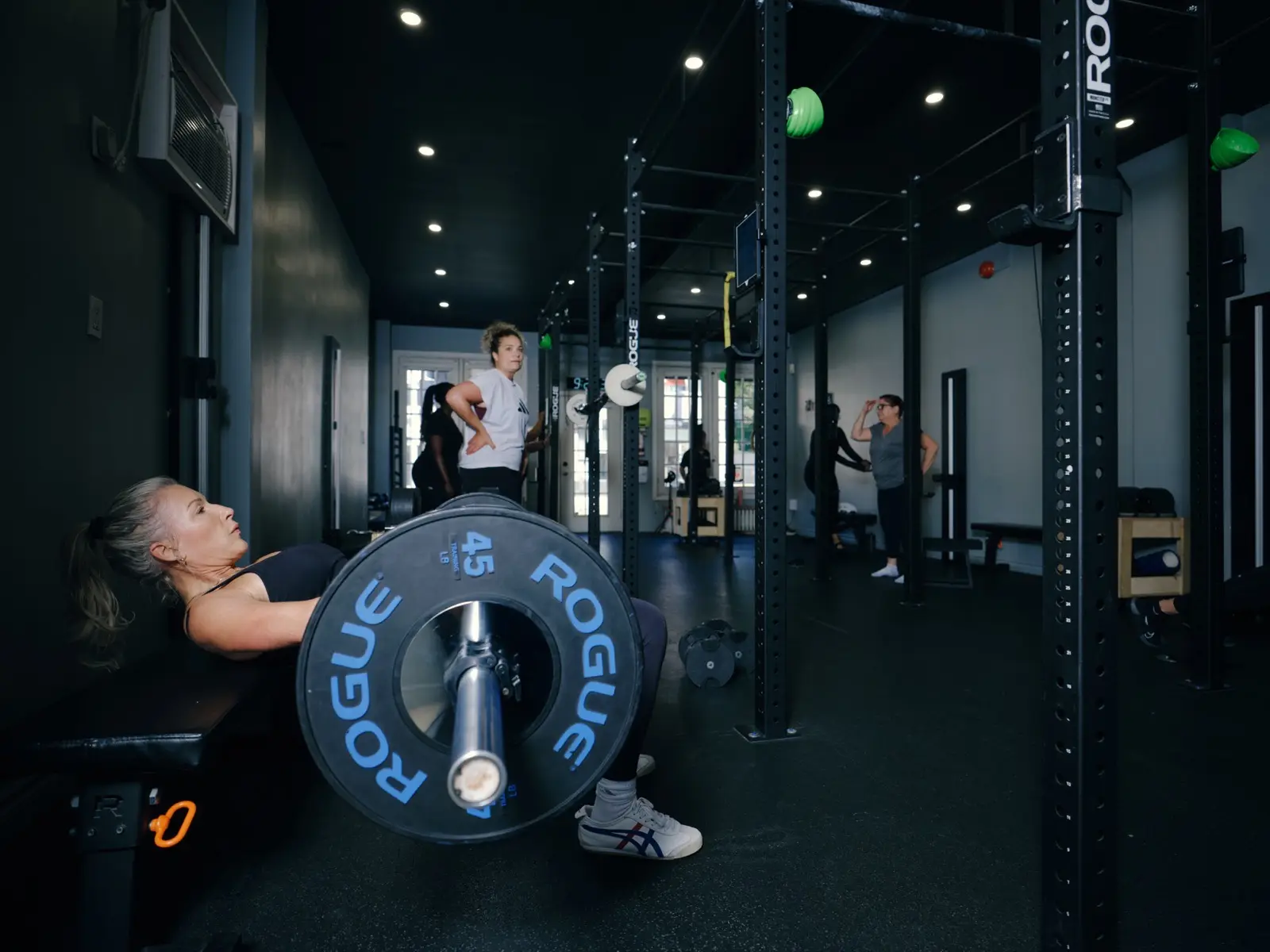
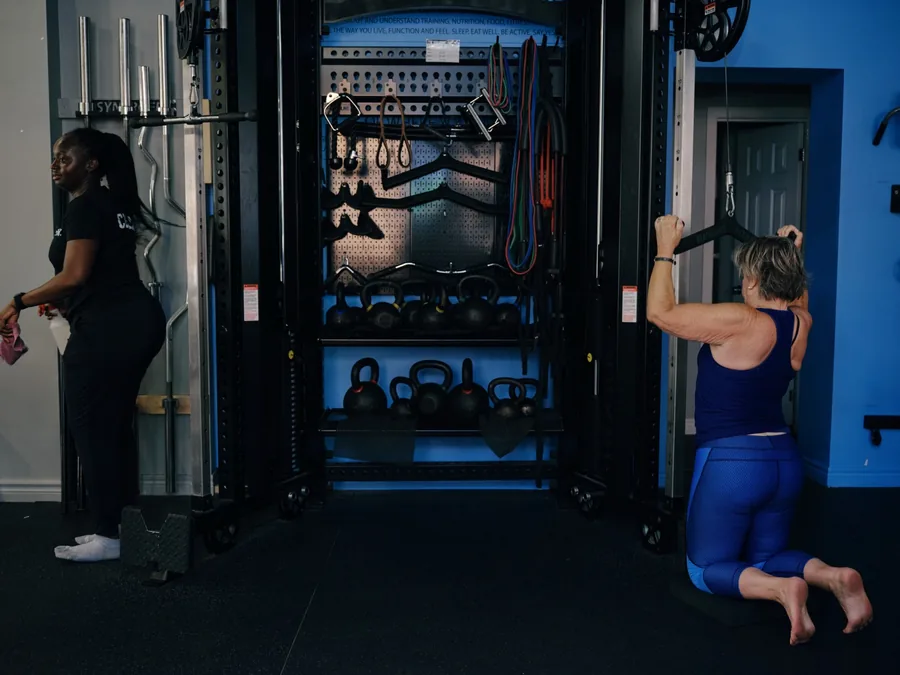
Thrive Fit is semi-private, in The Beaches, capped at six people per coach. Membership is $225, $325 or $425 biweekly plus HST, for nine, thirteen or eighteen sessions a month. New memberships also pay a one-off $97 program design fee.
| Membership | Sessions a month | Price | Per session, before tax |
|---|---|---|---|
| Get Started | 9 | $225 biweekly plus HST | About $54 |
| Get Fit | 13 | $325 biweekly plus HST | About $54 |
| Get After It | 18 | $425 biweekly plus HST | About $51 |
| New membership fee | One-off | $97 program design fee | Not per session |
| Body Reset Baseline | 30 minutes, one to one | No charge | No charge |
At the middle tier that works out around $54 a session before tax. We publish it because a business that will not tell you the price before a phone call has usually decided the price is a problem to be managed rather than a number to be stated.
Everyone starts with a private Body Reset Baseline. Thirty minutes, one to one, no charge, and nothing to buy at the end of it. That is not a discount; it is how we find out whether we can help before anybody spends anything.

How to work out what you should spend
Start from frequency rather than price. Twice a week is the floor at which most people see a change worth paying for, and three times is where it stops being fragile. Then find the format you can sustain at that frequency, and only then compare the numbers.
The most expensive personal training in Toronto is the sort you buy at $130 an hour, use for six weeks, and stop. The cheapest is the sort you keep doing for two years. Almost nobody prices it that way, and it is the only comparison that matters.
If you want cheap, quick fixes and short-term results, this is not the place for you. If you are looking to really change your life and your health - Thrive is the place you've been looking for. - Derek Prinsloo, Google review