Training around an injury or a knee replacement

A previous injury, a knee or hip replacement or a back that flares up is not a reason to avoid training. It is a reason to be coached rather than to follow a video. But there is a line between what a coach does and what a clinician does, and this article is mostly about where that line sits.
Nothing below is medical advice, and none of it is a substitute for your surgeon or your physiotherapist. It is a coach explaining what coaching can and cannot do, which is a different and narrower thing.
Can you exercise after a knee replacement, a hip replacement or with back pain? Usually yes, once your surgeon or physiotherapist has cleared you. A coach changes the range, the load or the angle to work around the problem. Diagnosis and treatment stay with a clinician. Numbness, leg weakness or pain at night need a clinician first.
The boundary, stated first
This is our scope, in the wording we use everywhere and do not vary:
Thrive Fit specializes in highly individualized strength and fat-loss coaching. Our team has extensive experience adapting exercise for people with different training histories, previous injuries, surgeries, joint replacements, pain, mobility limitations and other physical considerations. When an issue requires assessment or treatment outside a fitness professional's scope of practice, we collaborate with or refer to regulated healthcare professionals.
In practice that means coaches never diagnose, never provide physiotherapy, never claim to medically rehabilitate you and never prescribe treatment. If somebody in a gym is telling you what is wrong with your knee, they have left their scope and you should treat everything after that sentence with suspicion.
| Your coach | Your surgeon or physiotherapist | |
|---|---|---|
| Diagnose what is wrong | No | Yes |
| Treat or rehabilitate an injury | No | Yes |
| Decide when you are cleared to train | No | Yes |
| Change the range, load or angle around it | Yes | Advises |
| Build strength once you are discharged | Yes | Clears you for it |
What training around something actually means
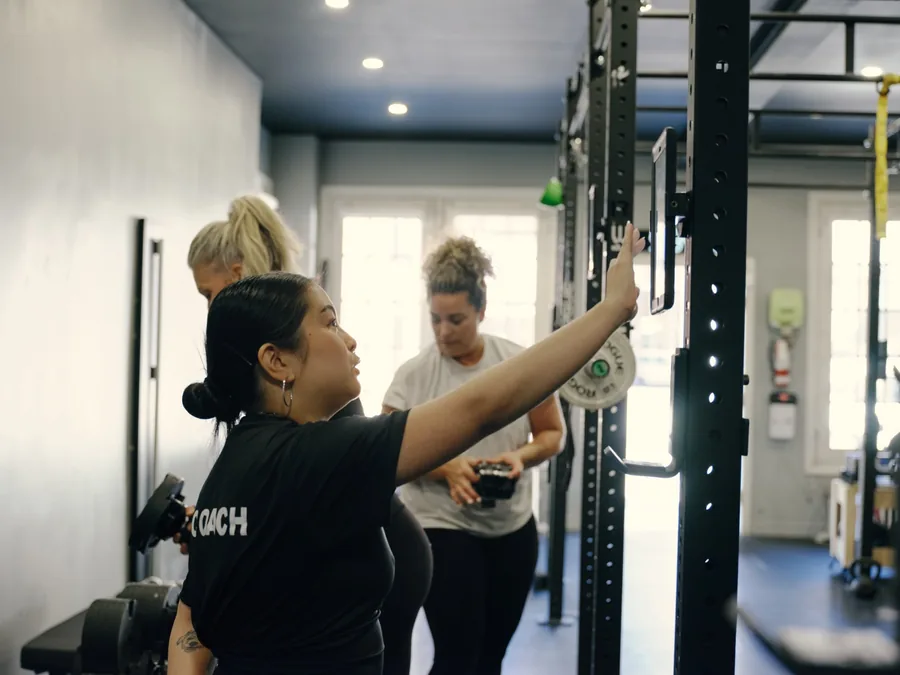
It does not mean avoiding the area. Most of the time it means changing the range, the load, the angle or the tempo so the same muscles get worked without provoking the thing that hurts.
A squat that a knee will not tolerate at full depth is often fine to a box. A pressing movement a shoulder objects to overhead is often fine at an incline. That is the ordinary work of a coach and it is why an individual program matters more here than anywhere else.
The other half is knowing what not to change. People with a history of pain often reduce load far more than necessary and then never progress, which produces its own problem: a body that stays weak around the thing it is protecting.
After a knee or hip replacement
Your surgeon and your physiotherapist decide when you are cleared and what you are cleared for. That is not a coach's call and we do not treat it as one.
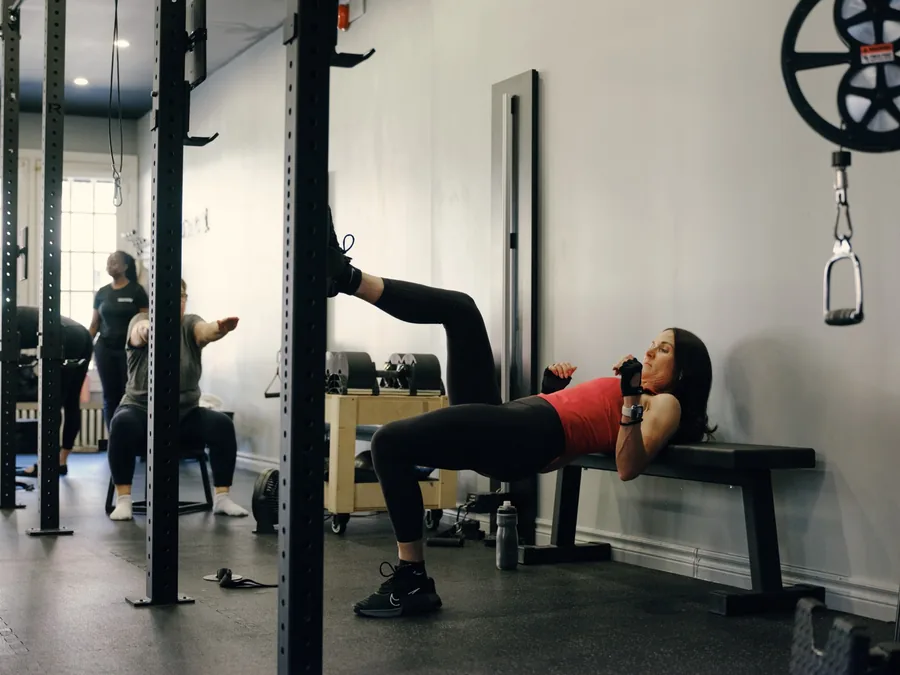
Once you are discharged from physiotherapy, there is usually a gap. You have been signed off as recovered and given no structured way to get stronger, which is where a lot of people stall for years. Filling that gap is squarely within a coach's scope, and it is one of the more satisfying parts of the job.
80 to 85 of our members have trained with us after a joint replacement. Hips are the most common, then knees, and three have been shoulders.
What we ask for is straightforward: what you have been cleared to do, and anything you have specifically been told to avoid. If that is not clear, we ask you to go back and get it clarified before we load anything.
Working out with back pain
Backs are the most common thing people arrive with and the one where the boundary matters most, because "my back hurts" covers an enormous range of unrelated situations.
Anything with numbness, pins and needles, weakness in a leg, or pain that wakes you at night belongs with a clinician before it belongs in a gym. We will say so and we will not train around it.
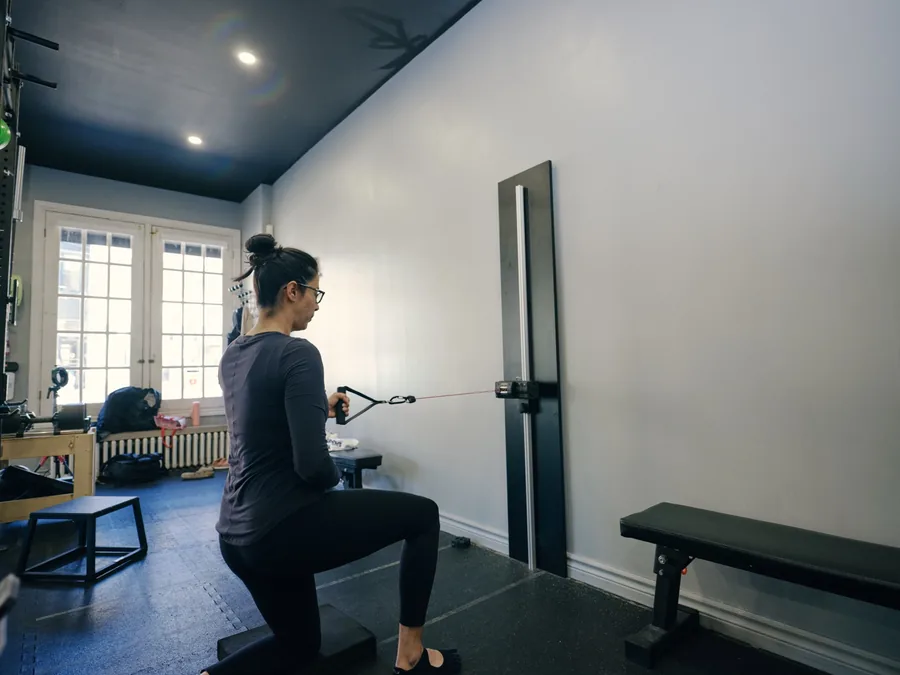
For the far more common presentation - a back that grumbles, stiffens after sitting and flares occasionally - training is usually part of the answer rather than a risk to be managed. The approach is unremarkable: start lighter than feels necessary, build slowly, and stop treating a flare as a reason to start over.
How this works at the studio
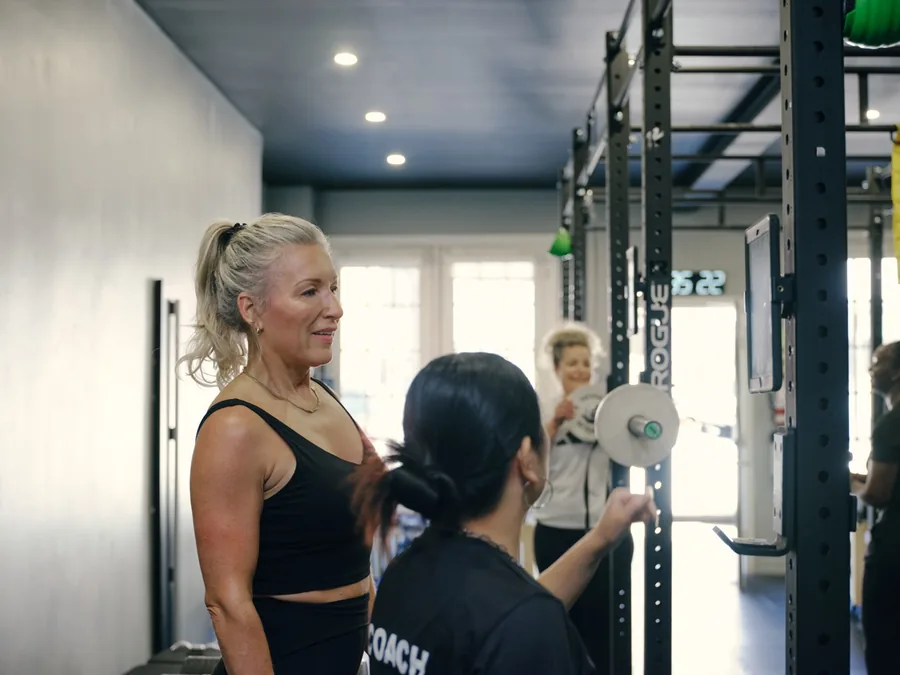
Everyone starts with a private Body Reset Baseline, and this is the conversation where injuries come up properly rather than being mentioned in passing on the floor.
From there it is normal programming, modified where appropriate, and clearance or referral when the issue is beyond what a fitness professional should be handling. Physiotherapy is available through our regulated healthcare team when appropriate.
Up to six people train at once and every one is on a different program, which is the practical reason this format suits people with a history. Nothing about your session depends on what anybody else is doing.
At other gyms I sustained injuries trying to power through group workouts without proper technique. When I joined Thrive there was an in-depth assessment including a discussion of my fitness goals. - Aynsley Young, Google review
When the answer is not us
If you are in an acute episode, undiagnosed, or still inside a rehabilitation program, the right next step is a clinician rather than a coach. We will tell you that at the Baseline and it costs you nothing to hear it.
That is not modesty. Training someone whose problem has not been assessed is how a manageable issue becomes a serious one, and no result is worth that.