Semi-private vs small group training
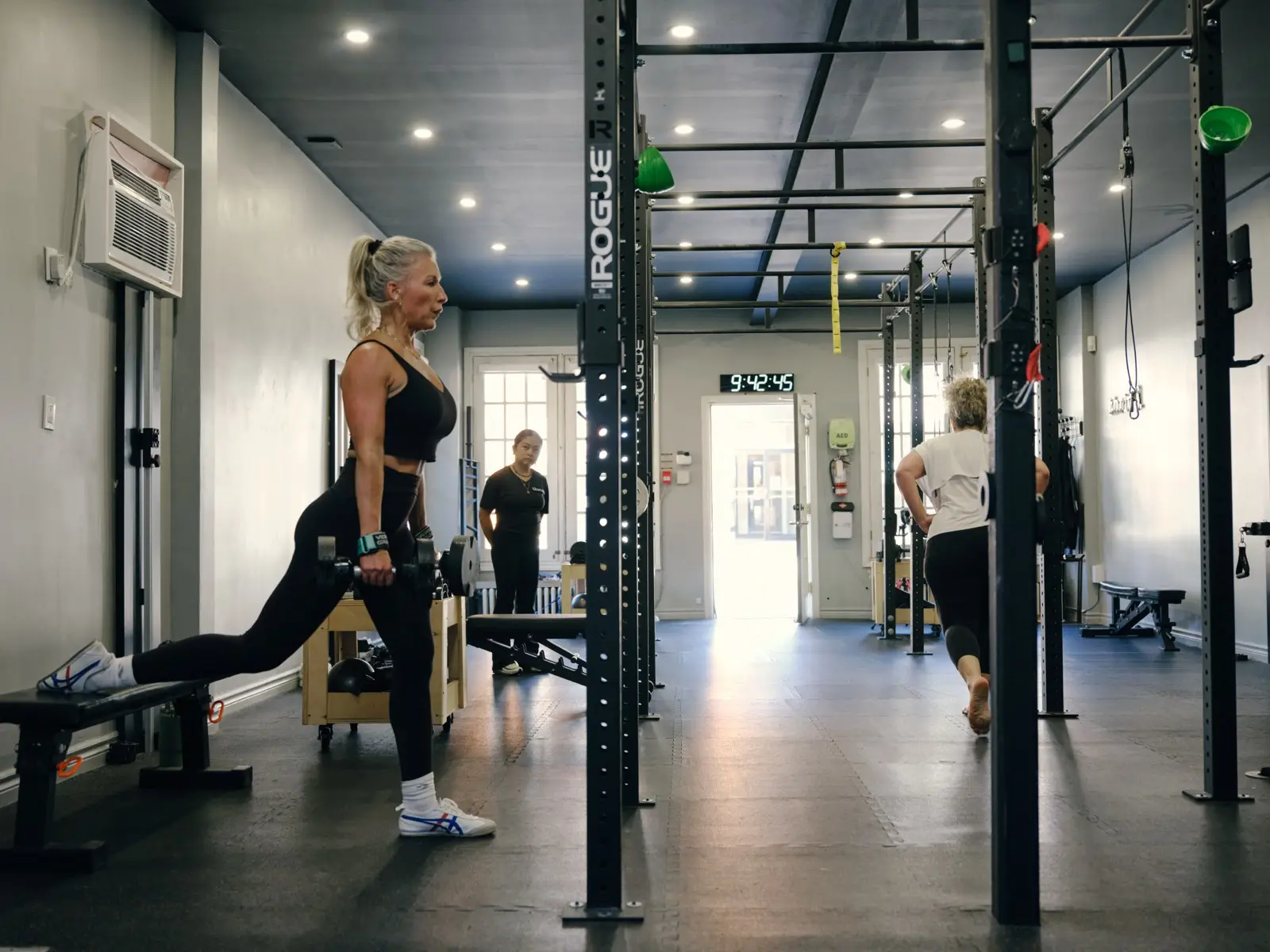
Small group training and semi-private training sound like the same thing, and from the doorway they look like it too. A handful of people, one coach, an hour. The difference is not how many people are in the room. It is whether you are all doing the same workout.
That one difference decides how much attention you get, what you pay, and whether the hour fits a body with its own history. Here is how to tell them apart before you hand over a card, including the part of the injury research most articles on this leave out.
The difference is whose workout it is
Here is the test. Stand in the doorway for thirty seconds and watch. Is everybody doing the same thing?
In small group training, one program is written and the whole room follows it. A good coach will scale a movement for a sore shoulder, or swap an exercise for someone who is not ready for it. But there is one workout for that session, and you are in it.
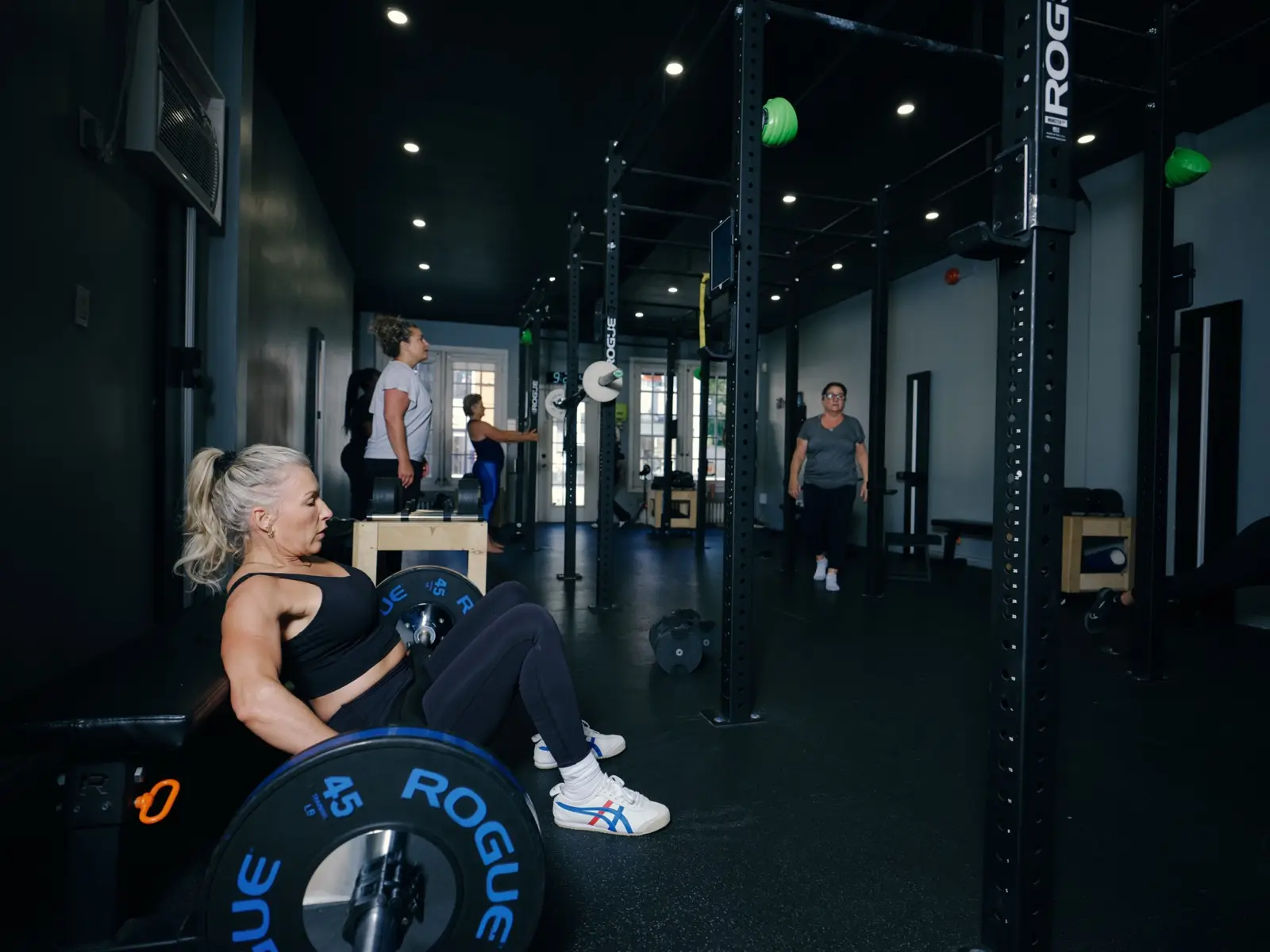
In semi-private training, the coach writes a separate program for every person. Four people can be doing four unrelated things at the same moment.
One is under a barbell. One is doing single-leg work on a bench. One is finishing the conditioning part of their week.
They share a coach, a room and an hour. They share nothing else.
| Small group | Semi-private | |
|---|---|---|
| Group size | usually 4 to 12 | usually 3 to 6, and we cap at 6 |
| The program | one workout for the whole room | a separate program for each person |
| When you need a change | the coach scales a movement | your program is written around you from the start |
| Price | usually the cheaper of the two | sits above small group |
| Suits | generally healthy, likes a room moving together, price decides | coming back from injury, a dated goal, or classes that did not stick |
Same room. Same coach. Same hour. The only question is whether you are all doing the same workout.
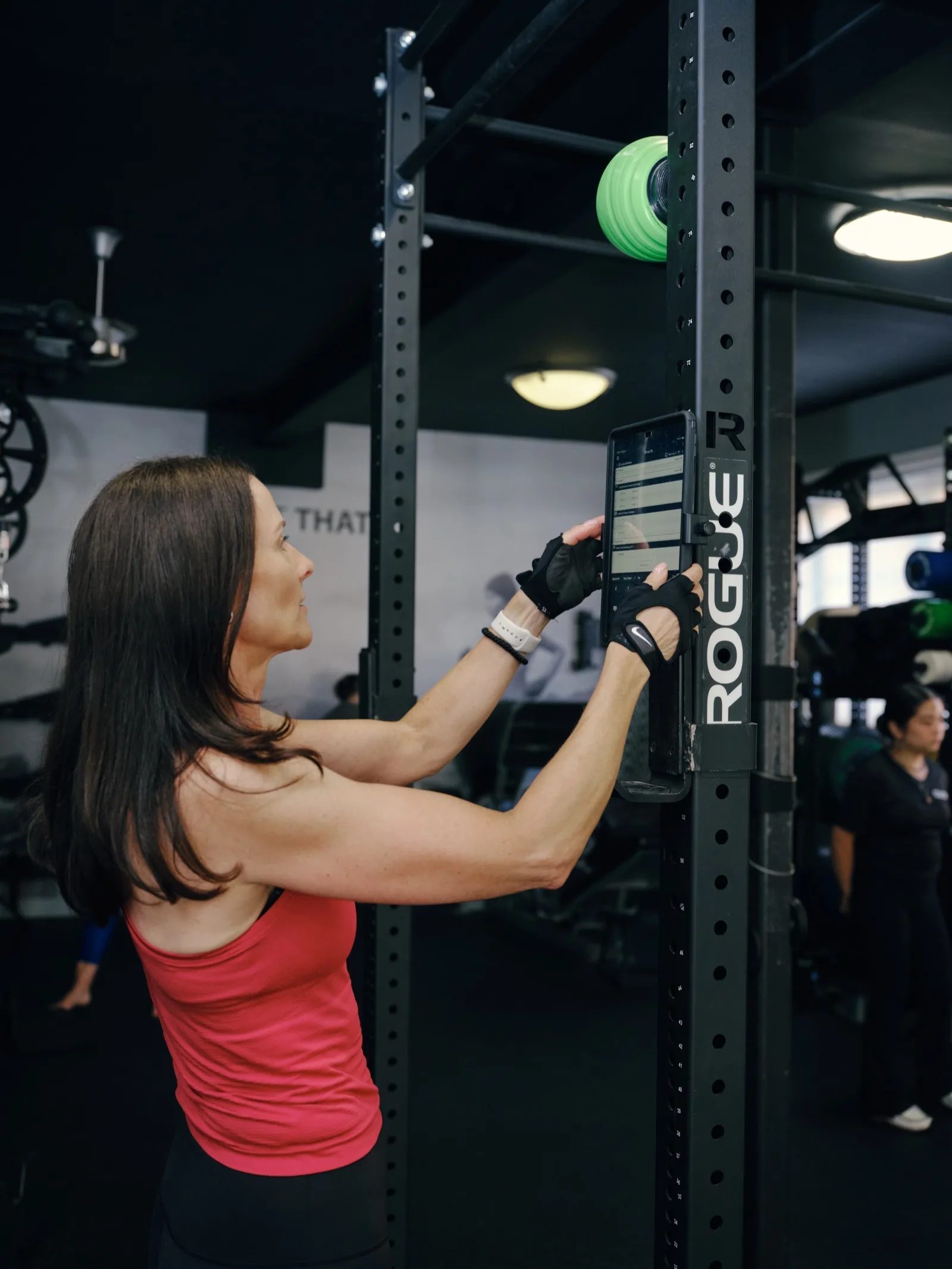
That is not our definition, it is the industry's. Two-Brain Business, which coaches gym owners on how to run both models, puts it plainly: in semi-private, clients do not do the same workout, or a version of the same workout. In small group, the coach writes one programming stream and everybody follows it.
What is small group personal training?
Small group personal training is a class with a cap on numbers. Usually somewhere between four and twelve people, one coach, one workout, a fixed slot in the timetable.
The pitch is mostly fair. You get far more attention than you would in a room of thirty, and you pay a fraction of what one to one costs.
The session is also at seven on Tuesday whether you feel like it or not, and for plenty of people that is the part that actually works. We would rather you did that than nothing.
What you trade away is specificity, in three fairly specific ways.
- The program was written before the coach knew who was coming. If you have a knee that does not straighten or a shoulder that clicks at the top of a press, you are being modified around somebody else's plan rather than given your own.
- Your progress is tied to the room's. When the program moves on, you move on with it, ready or not.
- Your goal has to be close enough to everyone else's. If it is not, the session is a compromise you are paying for.
What semi-private training looks like on the floor
Semi-private starts at the other end. Your program is written for you first. Then you are booked into a session where other people are doing theirs.
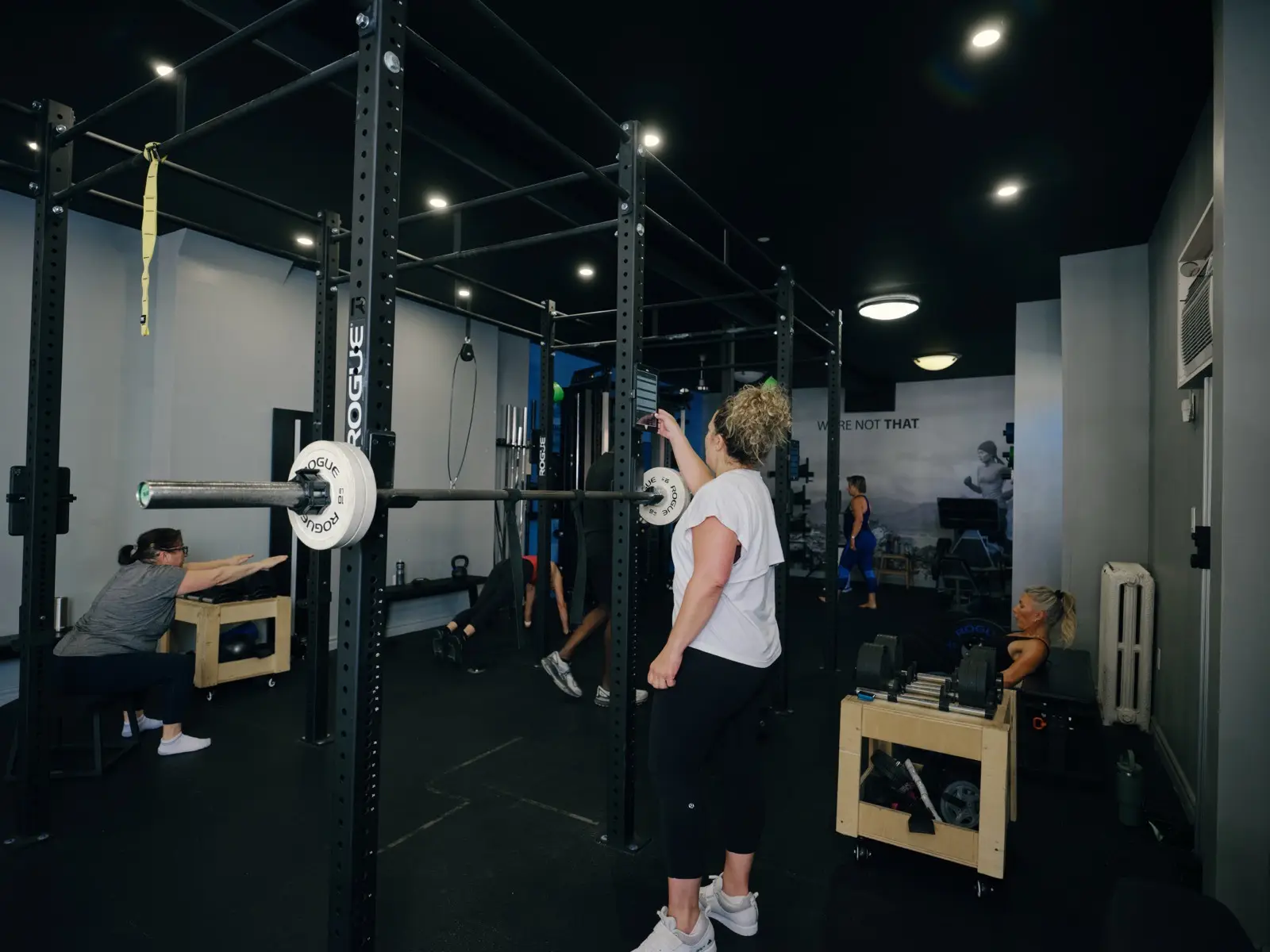
In practice it is busier and quieter than people expect. Nobody is being counted in. There is no music telling the room when to push. The coach moves between people, watches a set, changes a weight, fixes a position, moves on.
The real advantage is not privacy. It is that one session can hold four people who have nothing in common. Someone eight weeks past a knee replacement can train in the same hour as someone chasing a personal best, and neither is being compromised for the other.
The trade is cost and rhythm. It sits above small group on price, and it asks a lot of the coach, who has to hold several separate plans in their head at once.
Done badly it is just a busy room. Done properly it is the closest thing to one to one that most people can sustain for years.
Which one suits you
Small group is the better answer if you are generally healthy, you like the energy of a room moving together, the timetable is what gets you through the door, and price is the deciding factor.
Semi-private is the better answer if any one of these is true.
- You are coming back from an injury or an operation.
- You have a specific goal with a date attached to it.
- You have tried classes before and quietly stopped going.
- You have been training a while and stopped progressing, which usually means the program stopped being about you.
There is no ranking here. They are different products that happen to look alike from outside. The only real mistake is paying for one while believing you bought the other.
If price is what you are weighing, we published what a personal trainer costs in Toronto and what semi-private training costs, both with real numbers rather than ranges.
What the injury research actually says
The sales version of this article would tell you group classes are dangerous. They are not, and it is worth saying so plainly.
Mayo Clinic researchers tracked 100 people through a six-week high-intensity group program. The injury rate came out at 9 per 1,000 training hours during the program, against 5 per 1,000 in the six weeks before it started. The increase was not statistically significant.
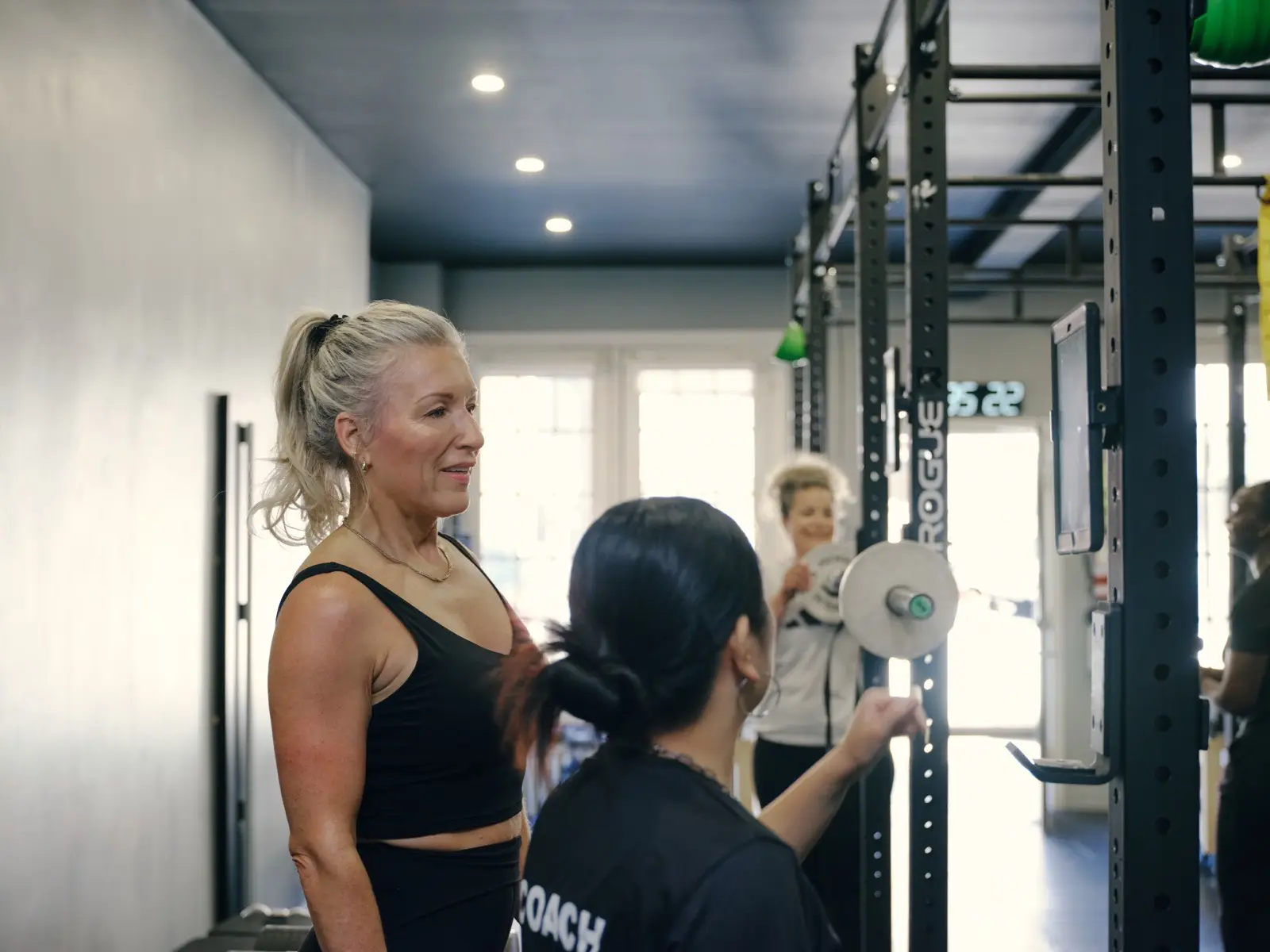
The interesting part is what the researchers credited for that. Participants had a small instructor-to-participant ratio, which let coaches watch technique closely, and most of the injuries that did happen were on movements that go wrong when the technique goes wrong.
So the protective factor was not the format. It was how many people one coach was watching. That cuts both ways: a small group of six with an attentive coach is safer than a semi-private session where the coach has taken on too many.
Worth being straight about how strong that finding is. It is an association drawn from one six-week study, not a controlled trial of coaching ratios. Treat it as a strong hint rather than settled science.
At other gyms I sustained injuries trying to power through group workouts without proper technique. When I joined Thrive there was an in-depth assessment including a discussion of my fitness goals. - Aynsley Young, Google review
That is one member's experience, not evidence about classes in general. But it is exactly the failure the research points at: nobody watching closely enough at the moment the technique goes. If you are training around something specific, we wrote about that in training around an injury.
How we run it at Thrive Fit
Thrive Fit is semi-private, and has been since we opened on Queen Street East in May 2013. Up to 6 clients per coach. In person only, at the studio. Everyone on their own program.
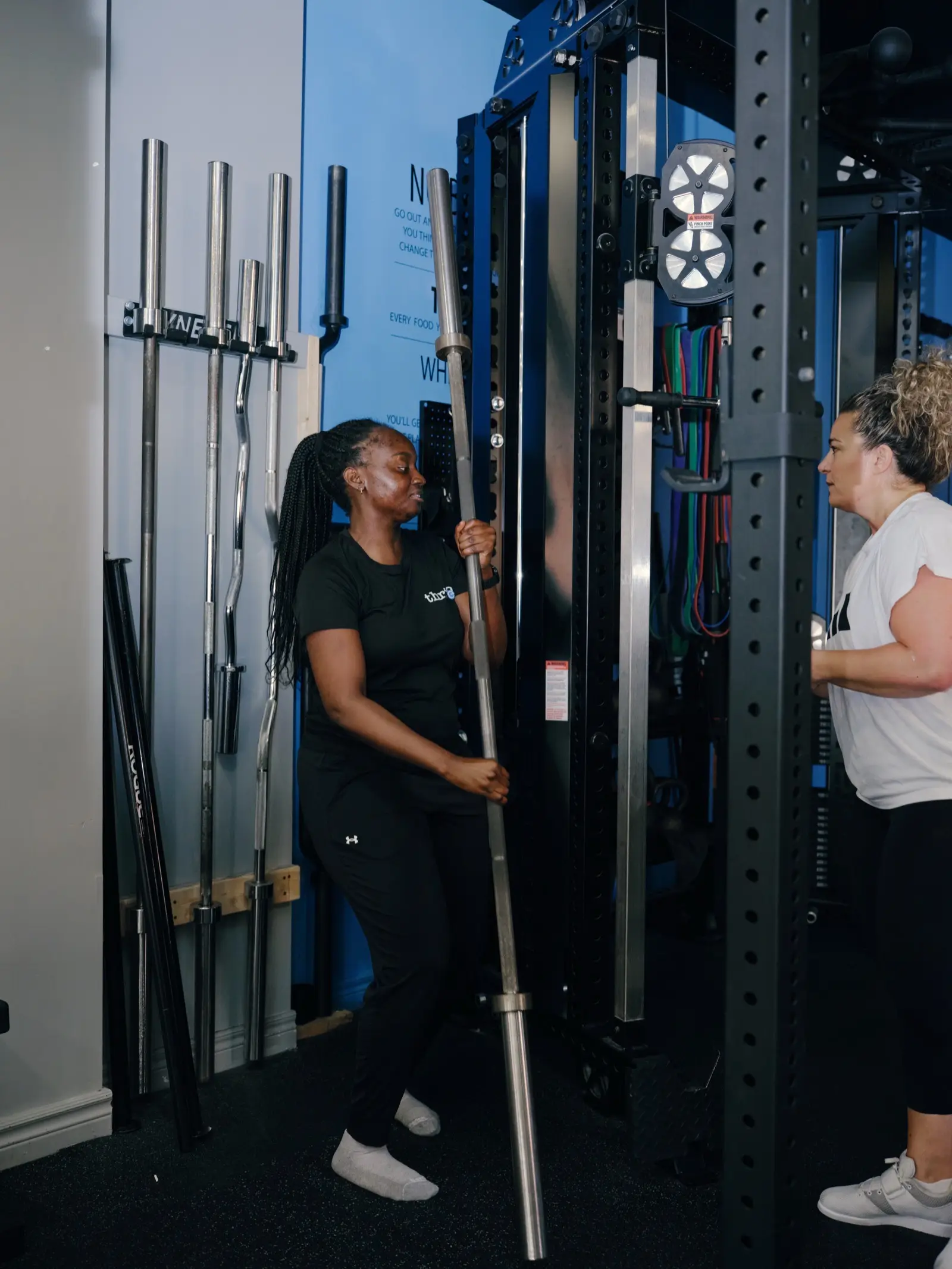
Four things we do on purpose. No music, so you have our attention. No mirrors, so nobody spends the hour watching themselves.
No pretence, so you can turn up as you are. No hype, because the results come from the work.
We name the certifications rather than writing certified and leaving it there. Brian is Precision Nutrition Level 1 and Functional Movement Systems Level 2. Stephanie is CanFitPro certified and Precision Nutrition Level 1.
Raheemat is a CSEP Certified Personal Trainer with a kinesiology background. Carly is ISSA certified. Lisa Burnfield, a registered physiotherapist, runs her own practice in the same building.
One member described the point of it better than we can.
As someone who has never consistently exercised, been very intimidated and not confident about going to a gym her whole life, I haven't missed a single week. - Kate Tieng, Google review
That is what semi-private is actually for. Not intensity. Attendance.
We are rated 4.9 across 52 Google reviews, and you can read them on our reviews page.
If you are still not sure which model suits you, the Body Reset Baseline is how to find out. Thirty minutes, one to one, including a body composition scan and a one-page plan you keep. No charge, and nothing to buy at the end of it.